
Marbella · Centre
Holiday Rentals in Marbella Old Town
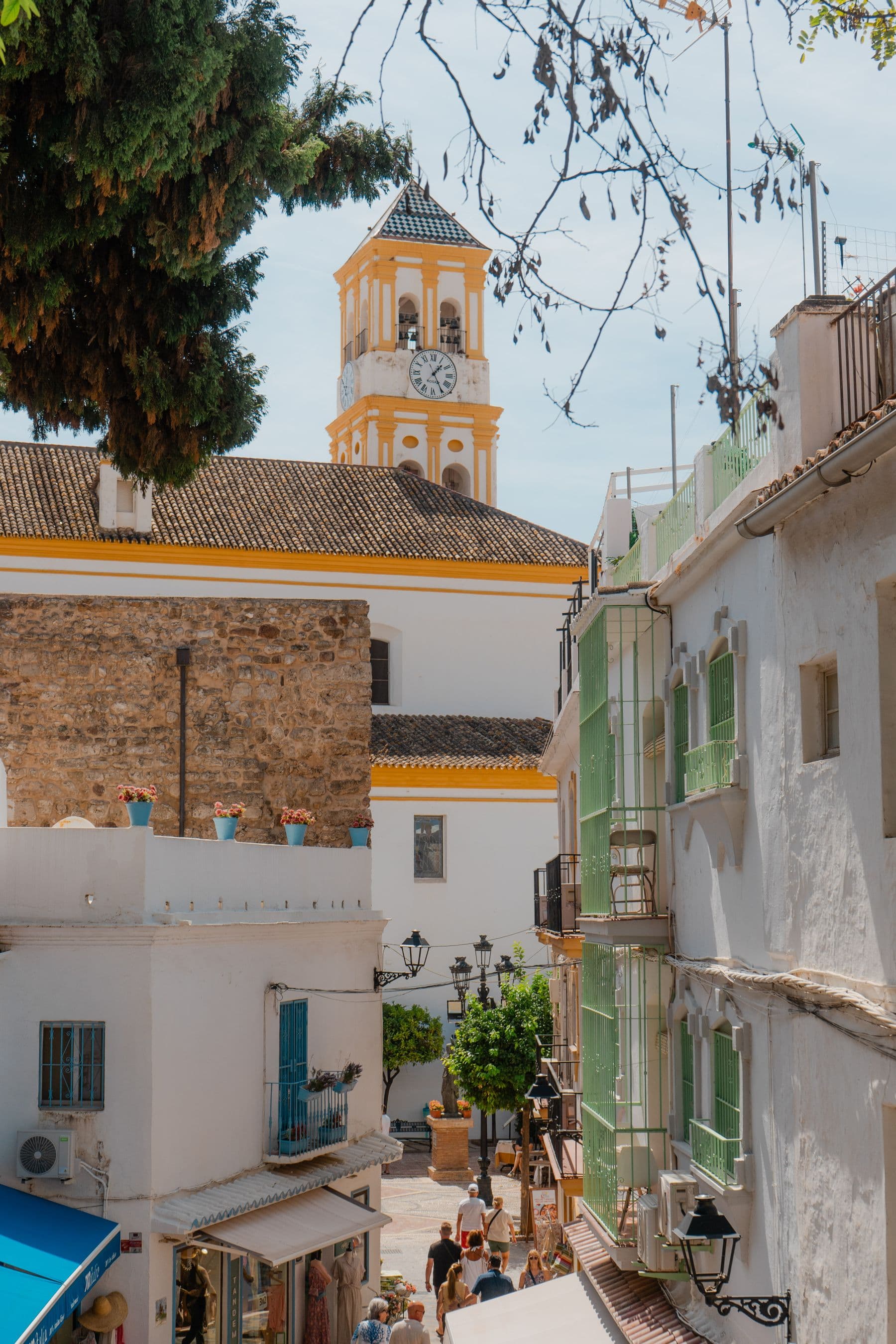
Marbella's Casco Antiguo is the part of town the brochures forget to mention exists: a knot of whitewashed lanes around the Plaza de los Naranjos, where the town hall has stood since the 1500s, orange trees perfume the squares in spring, and grandmothers still water geraniums above the tapas bars. It is small, and you can cross it in ten minutes, but it is real, lived-in, and ten minutes' flat walk from the beach. Staying here is the opposite of resort life. You buy peaches at the Mercado Municipal, take coffee where the price is written for locals, eat dinner at a different bar each night, and stroll the Alameda park and the Dalí bronzes on Avenida del Mar after. Apartments in Marbella Old Town are mostly small and characterful rather than large and glossy; ours, Apartamento Azahar, is a renovated two-bedroom on a quiet lane two minutes from the square, close enough to everything that you will not start the car all week, if you brought one at all. For travellers who want Spain rather than a version of it, this is the Marbella base.
What's actually inside the old town
The Casco Antiguo is compact: roughly the area between the remains of the Moorish castle walls and the Alameda park, perhaps ten minutes corner to corner. Plaza de los Naranjos is the centre of gravity: sixteenth-century town hall, orange trees, café terraces that charge a square-tax (a coffee here costs double the side streets; have one anyway, once, for the setting). The lanes radiating off it, including Calle Ancha with its grand old doorways and Calle Aduar climbing past whitewash and bougainvillea, are the postcard, and they are genuinely lovely in the early morning before the day-trippers land around 11.
The Iglesia de la Encarnación anchors the eastern side, the castle walls peep out between houses, and the Mercado Municipal, five minutes north, is where to shop: fish off the Marbella boats, jamón cut to order, strawberries in spring. Go before 1pm; it sleeps in the afternoon.
South of the old town proper, the Alameda's tiled benches lead to Avenida del Mar, the marble rambla lined with Salvador Dalí bronzes, which delivers you to the seafront in five minutes. This little axis of square, park, sculptures and sea is the daily commute of everyone who stays here, and it does not get old.
Where to eat tapas (and where to skip)
The short version: eat one street off the postcard. Bar El Estrecho on Calle San Lázaro has been pouring and plating since 1954 and is still the benchmark. Stand at the bar, order the ensaladilla and whatever fish is on the board, pay a Spanish bill. Bar Altamirano, on its little square at the old town's eastern edge, does the seafood version: gambas, fried boquerones, tables outside under the plaque-covered wall, queues by 9pm in summer because it has earned them.
Mid-range, Casanis on Calle Ancha is the established French-Belgian bistro and the best date-night room in the quarter. At the top end, Skina on Calle Aduar holds two Michelin stars in a dining room the size of a garage, a counter-and-handful-of-tables place that needs booking weeks ahead and a willingness to spend €200+ a head, but it is the most serious cooking in Marbella.
Skip: most restaurants directly on Plaza de los Naranjos with photo menus, and anywhere with a host physically waving you in. The rule of thumb holds everywhere in Andalusia: the further the menu is from a laminated photograph, the better the kitchen.
Beaches, and getting around without a car
The old town sits a ten-minute flat walk from the sand. Playa de la Venus, by the marina, is the closest patch; the longer Playa del Faro and the main town beach stretch either side, with the full promenade running west toward the Golden Mile (25 minutes on foot) and on to Puerto Banús if you have the legs. These are proper urban beaches, serviced, busy in August, free, rather than the wide resort sand of Elviria, and they suit a swim-and-lunch rhythm more than a full camped-out day.
This is the best car-free base in Marbella, full stop. Everything in the quarter is walkable, the bus station connects you along the coast, taxis are plentiful at the Alameda rank, and day trips by bus to Ronda or Málaga are straightforward. If you do bring a car, do not attempt the old town lanes; park in one of the underground car parks on the perimeter (the Avenida del Mar one is the handiest, around €20–25 a day) and forget the car until you leave.
Noise, stairs and other honest caveats
Old towns come with old-town terms and conditions. Summer nights are sociable until 1 or 2am near the bar squares. Spaniards eat at 10 and the lanes carry sound, so if you sleep lightly, ask exactly where an apartment sits before booking (Azahar is on one of the quiet lanes, which is precisely why we bought it). Church bells start early. Many buildings are walk-ups with narrow stairs and no lift, an issue for anyone with mobility limits or vast suitcases.
Who should look elsewhere: groups wanting a pool, since private pools essentially do not exist in the quarter; families with toddlers who need a garden to burn energy in; and anyone whose Marbella is beach clubs and superyachts. That Marbella is 6 km west, and you would be commuting to it nightly. For everyone else, especially couples and food-led travellers, this is the most charming square kilometre on the coast.
Frequently asked questions
Keep exploring