
Marbella guide · 10 min read
Where to Stay in Marbella: An Honest Area Guide
Marbella is several very different holidays wearing one name, and booking the wrong area is the most common mistake guests make. We live here, and this is where we'd actually put you.
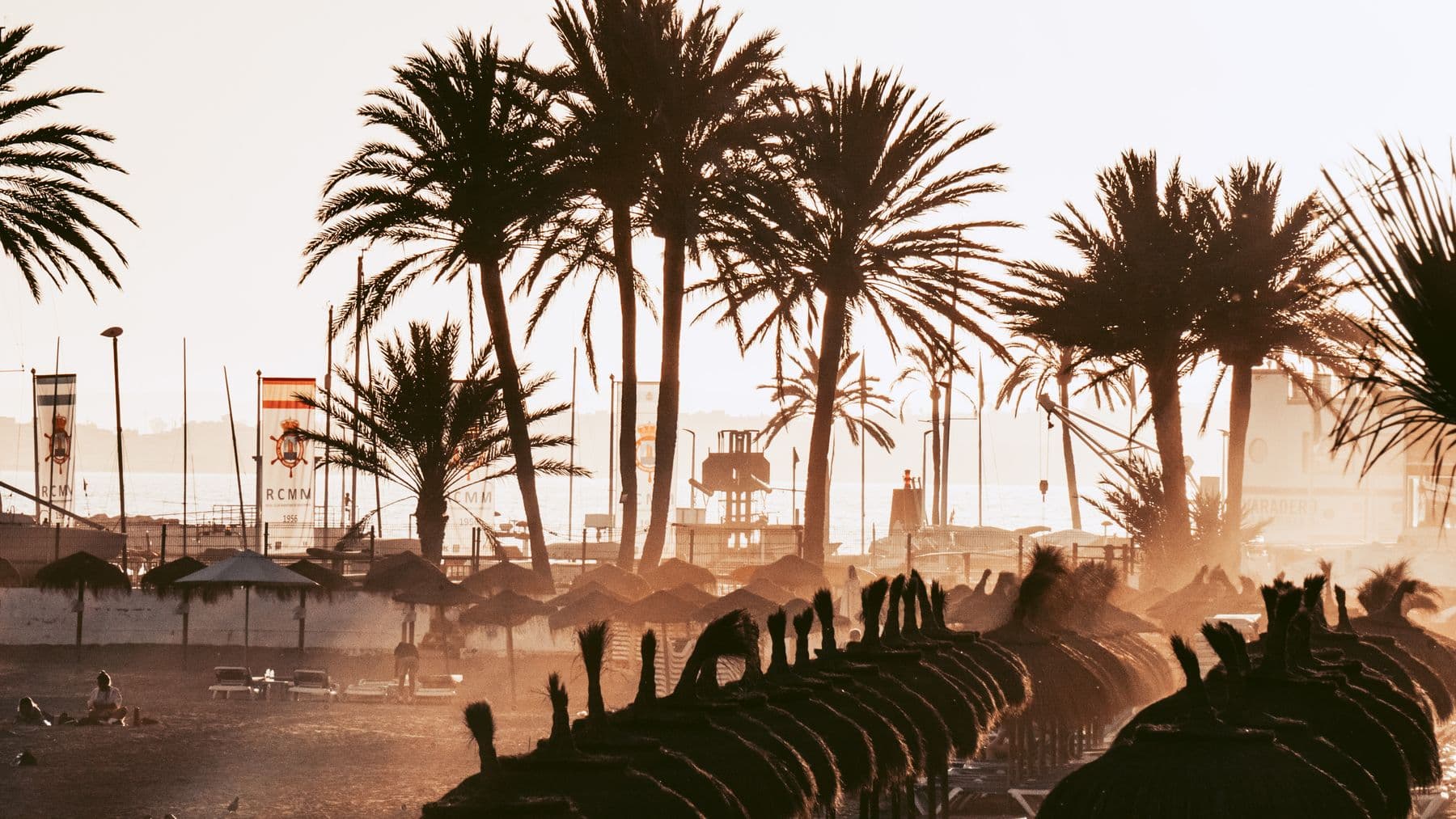
The short answer
First trip and you want everything walkable: the Golden Mile if the budget stretches, Marbella Old Town if you want Spain with your sea view. Nights out are the point of the trip: Puerto Banús, no debate. Travelling with kids: Elviria first, San Pedro de Alcántara second. Golf, or a group splitting a villa with a pool: Nueva Andalucía. Watching the budget: San Pedro, where your money goes roughly half again as far as it does two kilometres east.
Understand before you book: these areas do not blend into each other. From a 2am table in Puerto Banús to a silent pine-backed beach in Elviria is twenty-five minutes by car and a full universe in character, and picking your base badly means commuting to your actual holiday every day.
Below is each area in turn, with the trade-offs we would explain before recommending a stay.
The Golden Mile: quiet luxury you can walk
The Golden Mile is the stretch of coast between Marbella town and Puerto Banús, closer to six kilometres than a mile, anchored by the Marbella Club and Puente Romano, the two hotels that built the town's reputation in the 1950s. It is villas, beach clubs and umbrella pines, with the flat seafront promenade running the full length: 25 minutes on foot into the Old Town and 35 to Banús. It is the rare part of the Costa del Sol where a car is genuinely optional.
It suits couples and multi-generation families who want the best of everything within walking distance, and it has the densest restaurant cluster in southern Spain inside Puente Romano alone: Nobu, Coya and Leña at €90–150 a head. Who should avoid it: anyone on a party budget (the bars wind down by midnight) and anyone for whom prices matter, because a coffee here costs what lunch costs in San Pedro and there is no cheap supermarket within walking distance of most villas.
The detail that sells it to returners: in July and August the Starlite festival runs in a 1,500-seat amphitheatre cut into the quarry above Nagüeles, and you can walk home after Bocelli finishes. Our villa here, Villa Alazán, sits six minutes above the beach near El Ancla.
Villas within walking distance of Puente Romano and the beach.
Browse Golden Mile rentals →
Puerto Banús: stay inside the show
Puerto Banús is the marina José Banús opened in 1970, and it remains the loudest, glossiest square kilometre on the Spanish coast: superyachts, designer flagships, a Lamborghini-per-capita ratio that is a running local joke. Staying here rather than visiting transforms it: you walk home from dinner, swim off Playa del Duque before the crowds land, and leave the 4am taxi queue to other people.
It suits nightlife-first groups and anyone who wants energy on tap; the clubs do not fill until 1am and Ocean Club's pool parties are the daytime headline. Who should avoid it: light sleepers in July and August (the second line of the port at 3am is drunk and loud, so ask which way the bedroom windows face before you book anything), and people who came to Spain for Spain, because English is the default language here.
On price, the trick is one block. The front line charges €25 for a cocktail; the restaurants around Plaza Antonio Banderas, one street back, are mid-priced and fine, and the El Corte Inglés food hall solves self-catering. Have exactly one drink at Sinatra Bar, which has held its corner since the 1970s, watch the supercar parade, then eat somewhere the yacht crews actually go, like Los Bandidos.
Apartments over the marina, close enough to walk home from dinner.
Browse Puerto Banús rentals →
Nueva Andalucía: the Golf Valley
Nueva Andalucía climbs from behind Puerto Banús into the foothills, and everyone calls it the Golf Valley because Las Brisas, Los Naranjos and Aloha all sit within a ten-minute drive of each other, under La Concha. This is where people who could afford Puerto Banús choose to live instead: residential, leafy, silent at night, and five minutes from the noise rather than inside it.
It suits golfers obviously, but more broadly villa groups and returning visitors whose ideal day is pool and terrace with civilisation on call. Your money buys roughly half again as much house here as on the Golden Mile, with free parking thrown in. Who should avoid it: anyone without a car (the beach is 2–4 km away and the walk back up the hill in July is a punishment) and first-timers who want to step out of the front door into street life, because pavement life here is thin.
The fixed point of the week is Saturday morning, when the street market wraps around the bullring from about 9am. It is the best on this coast, with fruit and veg at half supermarket prices. Bring cash, and arrive before 11 for parking.
Villas with pools and parking, five minutes above Puerto Banús.
Browse Nueva Andalucía rentals →
Marbella Old Town: the Spain part of Marbella
The Casco Antiguo is the part of Marbella the brochures forget exists: whitewashed lanes around the Plaza de los Naranjos, a town hall that has stood since the 1500s, grandmothers watering geraniums above the tapas bars. You can cross it in ten minutes, the beach is a ten-minute flat walk via the Dalí bronzes on Avenida del Mar, and it is the best car-free base in Marbella by a distance.
It suits couples and food-led travellers. Bar El Estrecho has been pouring on Calle San Lázaro since 1954, and Skina holds two Michelin stars in a dining room the size of a garage. Apartments here are small and characterful rather than large and glossy, which keeps prices moderate by Marbella standards. Who should avoid it: groups who need a pool (private pools essentially do not exist in the quarter), families with toddlers who need a garden, and anyone whose Marbella is beach clubs and superyachts. That Marbella is six kilometres west and you would commute to it nightly.
One caveat we repeat to every guest: old towns come with old-town terms. Terraces near the bar squares run until 1 or 2am in summer because that is when Spain eats, and church bells start early. Our apartment, Azahar, is on one of the quiet lanes two minutes from the square. Location within the quarter matters more than the quarter itself.
Characterful apartments in the lanes, ten minutes from the sand.
Browse Old Town rentals →
Elviria and East Marbella: beach-first, two gears slower
Elviria, fifteen minutes east of town, answers a question the west side never asks: what if the beach were the point? The sand here is the widest in the municipality, with proper hundred-metre-deep beaches shelving gently into calm water, backed by dunes and umbrella pines instead of a coast road. Behind it sits a green residential grid of villas and garden apartments around Santa María Golf, with a commercial centre covering groceries and unpretentious dinners.
It suits families and longer stays better than anywhere else in Marbella: gentle water for small swimmers, sunbeds at €25–40 for two even in August against west-side prices, and most rentals within a fifteen-minute walk of the sand. Who should avoid it: anyone wanting to walk out of the door into bars, because the streets are quiet by 10pm and the area makes no apology for it, and realistically anyone without a hire car, because the good outings are all drives.
The very Elviria detail: Nikki Beach has thrown its white-bed champagne parties here since 2003, a few hundred metres from families building sandcastles, and the beach absorbs both.
Garden apartments and villas near Marbella's widest beaches.
Browse Elviria rentals →
San Pedro de Alcántara: the smart-money choice
San Pedro is the proper Spanish town next to Puerto Banús where the people who work in Puerto Banús actually live: school runs, €13 menús del día, a church square where old men argue about football, ten minutes from the glossiest marina in Europe. The masterstroke is the boulevard: when the A-7 was buried in a tunnel in 2012, the town built a kilometre of gardens on the roof, with playgrounds that run loud until Spanish bedtime, a skate park and free summer concerts. It became the town's living room.
It suits families and second-time visitors who have done the seafront thing and now want value: coffee at €1.60 rather than €4, sunbeds at €20–35 for two, rentals costing noticeably less per square metre than anywhere east. Banús is a €7–9 taxi or a flat 25-minute seafront walk when you want the other Marbella. Who should avoid it: nightlife-first groups who will resent even a short taxi at 4am, and anyone whose image of Marbella is manicured glamour. San Pedro is plain in places, with workaday twentieth-century architecture, and what it has instead is life.
San Pedro's appeal is repeatable rather than theatrical: visitors who like the beachside streets, local restaurants and easy promenade tend to choose the same area again.
Flat walking to the beach, the boulevard and €13 lunches.
Browse San Pedro rentals →
Old Town or Puerto Banús?
This is the comparison people actually agonise over, and it should not take long. They are six kilometres apart and they are different planets. Puerto Banús is international, loud, expensive on the front line and brilliant at exactly one thing: nights that start at 1am. The Old Town is Spanish, quiet by comparison, food-led and walkable, with the beach ten minutes on foot.
Our verdict: book Puerto Banús only if nightlife is the organising principle of the trip. For every other kind of holiday, including eating well, wandering, couples, culture and day trips by bus to Ronda, the Old Town wins, and you can still taxi to Banús in fifteen minutes for the one big night out. The reverse commute, an Old Town dinner from a Banús base, is also easy, but you will be paying Banús rates to sleep next to a scene you are opting out of.
Where we'd stay with kids
Elviria, and it is not especially close. The widest sand in Marbella with a gentle slope into calm water, gardens and pools as standard, dunes and pines instead of a coast road, and sunbeds that do not require a family conference at €25–40. The trade is needing a car, which most families bring anyway.
San Pedro is the strong second, and the better pick if you would rather skip the hire car: the boulevard playgrounds solve every evening, with dinner on a terrace while the kids burn off the day in front of you, and the beach is long, flat-walking and uncrowded. The dark horse is the Playa del Duque side of Puerto Banús, calmer and more family-shaped than the port's reputation suggests. The Golden Mile works beautifully for families too, if the budget genuinely does not matter; for everyone else the bills add up by Wednesday.
If it's your first time in Marbella
First-timers overweight nightlife and underweight walkability, then spend the week in taxis. Resist. If this is trip one, base yourself somewhere you can walk to dinner: the Golden Mile if the budget allows, the Old Town if you want the trip to feel like Spain, San Pedro if you want both texture and change from a fifty-euro note.
Two first-timer traps worth naming. Do not book Nueva Andalucía without a hire car, however good the villa photos look. The valley is hills and long curving streets, and the beach is a drive. And do not book a Puerto Banús apartment over the second-line bars because it was €40 cheaper; in August that €40 buys you a 3am soundtrack. Get the area right and Marbella is one of the easiest holidays in Europe to get right.
Quick answers
About the author
Stayzia team
Local hosts & property managers
The Stayzia team manages the Marbella homes directly, handles guest questions day to day, and keeps these guides grounded in the places guests actually ask about.